For many African States, the obstacle to artificial intelligence is neither ambition nor talent. It is access to computing infrastructure, quality data and interoperable standards.
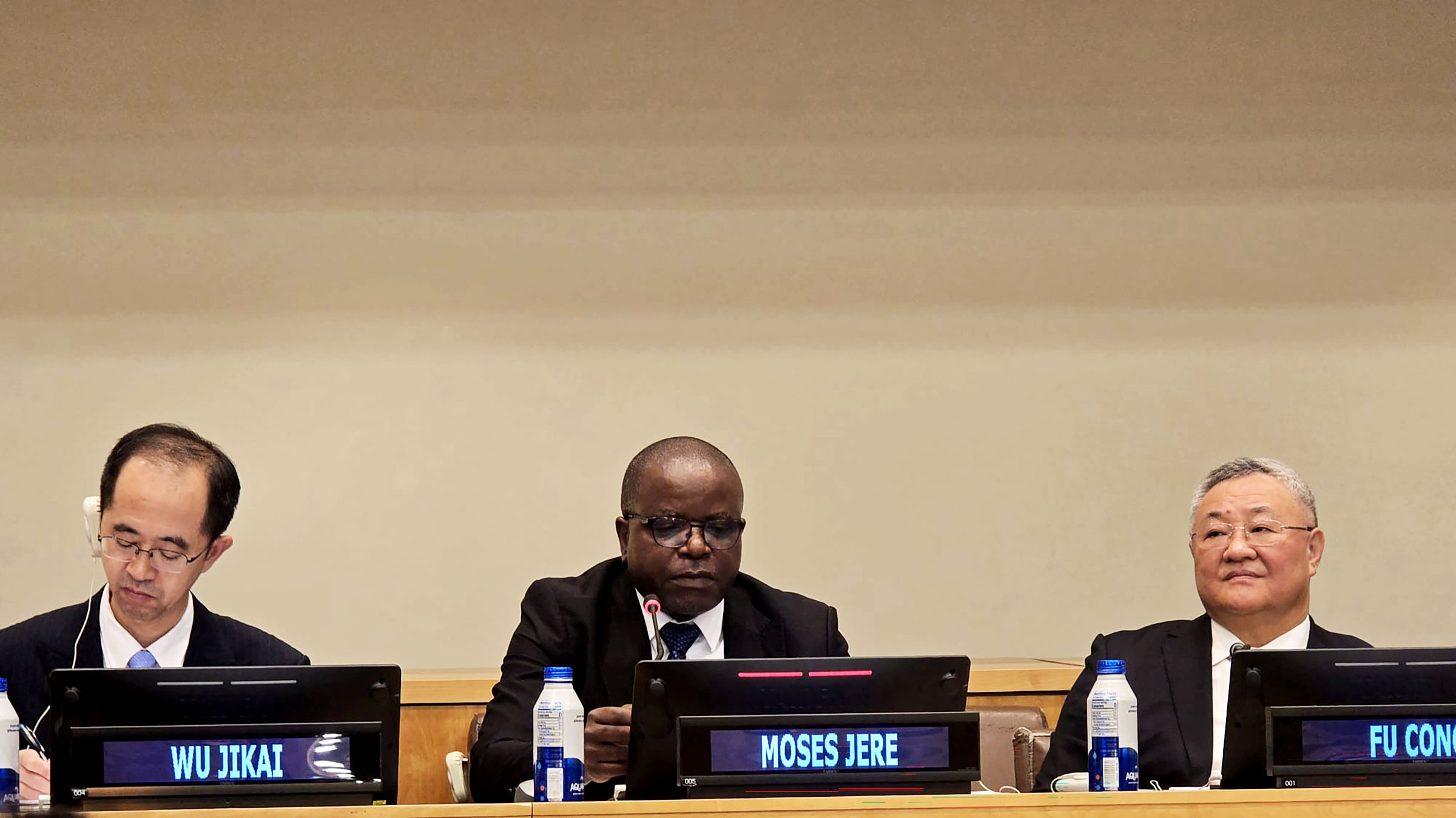
I made that point on 31 July 2026 at United Nations Headquarters, delivering Zambia’s remarks at the briefing on the 2026 World Artificial Intelligence Conference and High-Level Meeting on Global AI Governance, convened by the Permanent Mission of China.
The Group of Friends was launched at the United Nations on 3 December 2024, co-chaired by Zambia and China.
Zambia took part as Co-Chair, with China, of the Group of Friends for International Cooperation on AI Capacity-Building, and as one of the twenty-nine Founding Members of the World Artificial Intelligence Cooperation Organization.
Commitments worth putting into practice
The commitments now on the table are significant: 5,000 training opportunities for developing countries, movement towards a Global Fund for AI, and undertakings made in Shanghai on access to compute and to AI standards frameworks. These are encouraging developments, and we look forward to seeing them put into practice.
Measure capacity-building by what it delivers
Capacity-building is best measured by what it delivers.
Its value will be realised in execution: support that is predictable, driven by demand and aligned with national strategies. Paragraph 63 of the Global Digital Compact gives us the mandate, and financing is the natural next question for us to work through together.
If the world were 100 people
How many would be online in 2025? Choose a group.
| Group | Online, of every 100 people |
|---|---|
| World | 74 |
| High-income countries | 94 |
| Asia-Pacific | 77 |
| Arab States | 70 |
| Landlocked developing countries | 38 |
| Africa | 36 |
| Least developed countries | 34 |
| Low-income countries | 23 |
Source: International Telecommunication Union, Facts and Figures 2025. 2.2 billion people remain offline.
My thanks to the Permanent Mission of China for convening the briefing, and to all the colleagues who took part in the discussion.